
There are no second acts in American lives.
– F. Scott Fitzgerald
“The Last Tycoon”

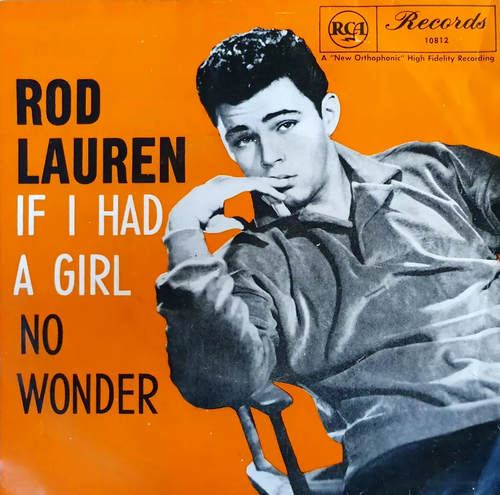
To get to the Second Act of Roger Strunk’s life – the Rod Lauren part of his life – it will take a certain amount of kismet. The right people have to be in the right place at the right time.
The right place, in this case, would be Fresno, California. The right people would include a record producer for a major record company and a rising R&B singer, both of whom just happened to be in Fresno, along with a local songwriter and a kid with stars in his eyes, both of whom were looking for a way to get out of Fresno.
Things like this cannot be planned.
Things like this can’t be dreamed up.
Things like this sometimes just happen, and you’re in the right place at the right time, and the right people just happen to show up, right on time.
Overture
The era of dance bands was coming to an end.
The era wasn’t dead yet – it had a few years of primacy left, but the glory days of the dance bands, the 1920s through the 1940s, were on the wane. As the 1950s began, other styles made inroads: Folk (which, at the time, would include the sub-genres known as “Country” and “Western”), Jazz (much of which was intended for listening, not dancing) and Rhythm & Blues (which would spawn a wild child named Rock & Roll that would pretty much drive a jagged stake through the barely-beating heart of the dance bands, along with the final few nails in its coffin).
Southern California-based Dick Peirce1Yes, “Peirce” is the correct spelling. was one of the latter-day saints of the dance band era – referred to in local newspapers as a “popular young maestro” with a “fast rising band”2As reported by the the Monrovia Daily News-Post on April, 11, 1951 (page 10). The Pasadena Independent also mentions him as a “popular young maestro” in their April 12, 1951, edition. – whose outfit backed local appearances by such notable vocalists as Mel Torme, Peggy Lee, Billy Eckstine, Kay Starr, Frankie Laine, and June Christy.

(Pasadena Independent, April 12, 1951)
At the age of six, Dick was a professional dancer – a solo act – whose dad played piano. In his spare time, Dick learned to play piano, and eventually decided that he’d rather watch others dance while he played.3Between being a kid dancer and a fledgling piano player, and before becoming an established bandleader, the Pasadena Independent reported that Peirce was a fighter pilot during World War II, and was shot down twice while on combat missions, according to an article in the paper’s April 12, 1951, edition.
In his early days, Peirce looked up to Jimmie Lunceford, Glenn Miller and the Dorsey brothers as his idols. He organized his first band in 1948 and, by the early 1950s, Dick and his outfit were in-demand regulars at Balboa and other premier spots around the Southland, signed to Decca Records, and considered to be purveyors of “the finest and cleanest musical precision since the early Claude Thornhill days.”4According to the Valley Times of North Hollywood, Calif., in their March 10, 1950 edition (page 4).
Dick and his group accompanied Frankie Laine on his road tours to San Francisco and beyond in the early 1950s, then ensconced himself as leader of the house orchestra (“Direct From The Cocoanut Grove”) at the Hotel Golden Theatre Restaurant in Reno for three shows every night.5As advertised in the Reno Evening Gazette of May 8, 1951 (page 2).

Peirce and his outfit (“en route to an extended engagement at the Thunderbird Hotel in Las Vegas”6As noted in a Salt Lake Tribune ad on October 18, 1951 (page 18).) backed up Ray Anthony for several weeks of shows in Utah – including a date for the University of Utah’s Homecoming Dance – then got back behind Frankie Laine for appearances various and sundry (to wit, the Duarte Community Center) and the “famed sepia entertainer” Nat “King” Cole7So described in the Valley Times of July 30, 1952 (page 5); “sepia” being mid-century code for Black or African-American. at the Downtown Paramount in Los Angeles, as well as Guy Mitchell8A recent discovery by Mitch Miller, who decided that “Guy Mitchell” worked better than the name Al Cernik was born with. at the famed Hollywood Palladium.
But it was the road, always the road, that kept Dick Peirce working – the Cal-Vada Lodge in Tahoe, the Rainbow Randevu (sic) in Salt Lake City – despite a demotion from Decca to the local Kem Records label in L.A., which released his “Lullaby of the Leaves” disc in July 1953.9“Good dance beat by local band,” according to Roger Beck’s “Off The Records” review in the Los Angeles Mirror of July 25, 1953 (page 16). Perhaps the biggest star to record on the Kem label was Jay North, the title star of TV’s “Dennis The Menace,” who released several tunes intended for the youth market.
By the mid-1950s, musical tastes were changing, if not evolving completely. Those who grew up with music made by dance bands continued to enjoy the music of their youth, but were increasingly more concerned with work, and family, and home. The newspaper ads for nightclub appearances by orchestras and singers, once common only a decade before at the end of the second World War, were now giving way to ads for television programs and drive-in movies.
Where to go for an accomplished musician, arranger and bandleader such as Dick Peirce?
Already having established a reputation within the industry for his musicianship and the ease with which he worked with others, the next logical pathway in the industry was producing records by other performers, and working as an A&R10The evergreen term in the recording industry for “artists and repertoire.” man – acting as a talent scout (a so-called “bird dog”), tasked with finding The Next Big Thing, whether or not that Thing was a flash in the pan – a flicker of gold dust among the alluvium – or actual 24 karat gold bullion that would earn dividends for years, if not decades, for his employer, and then pairing that raw talent with the right songs, the right arrangements and the right backing musicians to bring out the best in that raw, untested talent.
As the 1950s waned, Dick Peirce produced records at RCA Victor in Hollywood for such disparate talents as Tony Perkins (yes, the actor), Gogi Grant, Dinah Shore, Tony Martin, and Boots Brown And His Blockbusters.
In 1958, he took on the task of producing a young Los Angeles singer named Jesse Belvin, who had already written a top R&B hit called “Earth Angel,” recorded by The Penguins in 1954, and scored a hit of his own with “Goodnight My Love” on Hollywood-based Modern Records in 1956, which peaked at #7 on Billboard’s R&B chart.

Jesse Belvin’s recordings in the early and mid-1950s had bounced back and forth between several Southern California-based labels, including Specialty, Money Records, back to Specialty, then Modern Records, Moonglow (where his “I’m Not Free” was backed by Canadian teenager Paul Anka’s debut recording, “Blau-Wile-Deveest-Fontaine,” in one of the oddest pairings imaginable), back to Modern for a pair of singles, then Cash Records before one more release on Modern in 1957.
Sprinkled in, along with service in the Army, were a #2 Billboard R&B hit, “Dream Girl,” with Marvin Phillips (as Jesse & Marvin) in 1953; “Girl In My Dreams” with Eugene Church (as The Cliques), which stalled at #45 in May 1956; and an appearance on “You Cheated,” a 1958 hit by The Shields to which he added backing vocals (with Johnny “Guitar” Watson providing the accompaniment on his instrument of choice).
Belvin’s career had plugged along – some success, but not great success – when he arrived at RCA Victor’s Music Center of the World recording studios in Hollywood late in 1958, with Dick Peirce producing and Shorty Rogers11Recognized as one of the founding fathers of West Coast Jazz, Rogers – born Milton Rajonsky – was an ubiquitous presence on stage and in the recording studio during the 1950s, emerging from the big bands of Will Bradley, Woody Herman and Stan Kenton to leading his own outfit, and becoming an in-demand arranger and conductor. In 1953, Shorty Rogers and his orchestra (featuring Johnny “Guitar” Watson) was a headliner at the ninth edition of the Cavalcade of Jazz concert series at aging Wrigley Field in Los Angeles. In addition to his own wide-ranging recording career, Rogers also did arrangements for a wide variety of performers, from Lena Horne, Chet Baker and Mel Torme to Herb Alpert, Bobbie Gentry (“Ode To Billie Joe”) and The Monkees. conducting the orchestra and chorus.

Like Belvin, Rogers had been part of the rich, diverse, but also compact Los Angeles music sphere, and had previously connected with Belvin to oversee a series of demo recordings for Swing Time Records.12Released in 1997 as “Jesse Belvin with The Chargers: So Fine – The Shorty Rogers and Swing Time Demos” on CD by Night Train International. The collection of 29 sparse demos on the CD were recorded in 1954 and 1958, with all but one of the songs written by Belvin himself; the lone exception was “This Heart of Mine,” credited to Jo Ann Belvin – Jesse’s wife – and George Motola, who had also co-written Belvin’s signature tune, “Goodnight My Love.”
The song chosen by Peirce for Belvin’s first RCA session was an interesting one: “Pledging My Love,” which had been a posthumous hit for Johnny Ace in 1955.13The Johnny Ace rendition spent ten weeks at Number One on Billboard’s R&B charts beginning on February 12, 1955, following his accidental death on Christmas Day 1954.)
Belvin’s version is not much of an improvement on Johnny Ace’s original, but the flipside swings: a splendid take on the classic “Funny.”
But the gem laid down during the session was “Guess Who,” a self-styled love letter from Jo Ann14Credited on the RCA single as “Jo Anne Belvin.” to her husband, a song destined to join the idiom now fondly recalled as the Great American Songbook,
The recording session led to an album – cleverly titled “Just Jesse Belvin” – which featured “Guess Who” and “Funny” among other familiar chestnuts, including “Ol’ Man River,” “Alright, Okay, You Win,” “Love Is Here To Stay,” “Secret Love,” “Zing! Went The Strings Of My Heart,” “My Funny Valentine” and a mirror-image take on Sinatra’s 1957 Top Ten hit, “Witchcraft.”15Francis Albert’s version was nominated for both Record of the Year and Song of the Year at the first-ever Grammy Awards in 1959, which celebrated the best recordings from 1958.)
Footnotes
- 1Yes, “Peirce” is the correct spelling.
- 2As reported by the the Monrovia Daily News-Post on April, 11, 1951 (page 10). The Pasadena Independent also mentions him as a “popular young maestro” in their April 12, 1951, edition.
- 3Between being a kid dancer and a fledgling piano player, and before becoming an established bandleader, the Pasadena Independent reported that Peirce was a fighter pilot during World War II, and was shot down twice while on combat missions, according to an article in the paper’s April 12, 1951, edition.
- 4According to the Valley Times of North Hollywood, Calif., in their March 10, 1950 edition (page 4).
- 5As advertised in the Reno Evening Gazette of May 8, 1951 (page 2).
- 6As noted in a Salt Lake Tribune ad on October 18, 1951 (page 18).
- 7So described in the Valley Times of July 30, 1952 (page 5); “sepia” being mid-century code for Black or African-American.
- 8A recent discovery by Mitch Miller, who decided that “Guy Mitchell” worked better than the name Al Cernik was born with.
- 9“Good dance beat by local band,” according to Roger Beck’s “Off The Records” review in the Los Angeles Mirror of July 25, 1953 (page 16). Perhaps the biggest star to record on the Kem label was Jay North, the title star of TV’s “Dennis The Menace,” who released several tunes intended for the youth market.
- 10The evergreen term in the recording industry for “artists and repertoire.”
- 11Recognized as one of the founding fathers of West Coast Jazz, Rogers – born Milton Rajonsky – was an ubiquitous presence on stage and in the recording studio during the 1950s, emerging from the big bands of Will Bradley, Woody Herman and Stan Kenton to leading his own outfit, and becoming an in-demand arranger and conductor. In 1953, Shorty Rogers and his orchestra (featuring Johnny “Guitar” Watson) was a headliner at the ninth edition of the Cavalcade of Jazz concert series at aging Wrigley Field in Los Angeles. In addition to his own wide-ranging recording career, Rogers also did arrangements for a wide variety of performers, from Lena Horne, Chet Baker and Mel Torme to Herb Alpert, Bobbie Gentry (“Ode To Billie Joe”) and The Monkees.
- 12Released in 1997 as “Jesse Belvin with The Chargers: So Fine – The Shorty Rogers and Swing Time Demos” on CD by Night Train International. The collection of 29 sparse demos on the CD were recorded in 1954 and 1958, with all but one of the songs written by Belvin himself; the lone exception was “This Heart of Mine,” credited to Jo Ann Belvin – Jesse’s wife – and George Motola, who had also co-written Belvin’s signature tune, “Goodnight My Love.”
- 13The Johnny Ace rendition spent ten weeks at Number One on Billboard’s R&B charts beginning on February 12, 1955, following his accidental death on Christmas Day 1954.)
- 14Credited on the RCA single as “Jo Anne Belvin.”
- 15Francis Albert’s version was nominated for both Record of the Year and Song of the Year at the first-ever Grammy Awards in 1959, which celebrated the best recordings from 1958.